ImageJ
ImageJ: Unleash Powerful Image Analysis Capabilities
Introduction to ImageJ
In the realm of scientific research, image analysis software is a critical tool for data interpretation and presentation. ImageJ stands out as a robust, versatile platform, designed to facilitate the analysis, processing, and editing of scientific imagery. Developed by the National Institutes of Health, this open-source marvel has become a staple in laboratories worldwide, catering to a myriad of scientific disciplines.
Core Features and Functionalities
At its core, ImageJ is equipped with an array of powerful features that make it a preferred choice among professionals. Its ability to handle multiple image formats, coupled with its extensibility through plugins, makes it a highly adaptable solution. The software supports standard image processing functions such as contrast manipulation, sharpening, smoothing, edge detection, and median filtering, which are essential for enhancing image quality and clarity.
One of the most compelling aspects of ImageJ is its macro recording capabilities. This feature allows users to automate repetitive tasks, thereby increasing efficiency and consistency in data analysis. The software's open architecture is another key highlight, enabling users to develop and share new algorithms, fostering a collaborative environment that propels scientific discovery forward.
User Experience and Customizability
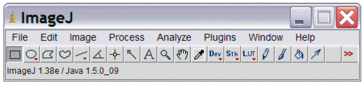
Navigating ImageJ's user interface is a straightforward experience, as it strikes a balance between simplicity and functionality. The layout is intuitive, allowing new users to quickly acclimate without feeling overwhelmed. More experienced users will appreciate the deep level of customizability available, as they can tailor the platform to their specific project needs.
The software's plugin ecosystem is a treasure trove of additional functionalities. From 3D image visualization to advanced statistical analysis, the community-driven plugins significantly expand the software's capabilities, ensuring that it remains at the technological forefront of image analysis.
Performance and Reliability
ImageJ is known for its remarkable performance, handling large datasets with ease. Its memory management allows users to work with images that would otherwise be too large for similar software platforms. Despite its extensive functionalities, ImageJ maintains high reliability and stability, minimizing the risk of crashes during critical analysis tasks — a testament to its solid development and support structure.
Collaboration and Support
The collaborative nature of ImageJ is one of its most distinctive features. The software's community is active and supportive, offering a wealth of knowledge to both novice and expert users. This community is not only a source of technical support but also a hub for innovation, with members regularly contributing new ideas and improvements.
Cost Efficiency
Perhaps one of the most attractive characteristics of ImageJ is its cost-efficiency. As an open-source platform, it is freely available to the scientific community, eliminating the financial barrier that often accompanies proprietary software. This accessibility has undoubtedly contributed to its widespread adoption and the democratization of high-level image analysis.
Final Verdict
ImageJ is a formidable tool in the arsenal of scientific research and analysis. Its blend of powerful features, user-centric design, and collaborative environment make it an invaluable resource for those requiring sophisticated image analysis capabilities. Its ability to adapt and grow with the needs of its user base ensures that it remains relevant and cutting-edge.
For researchers and scientists in need of a reliable, adaptable, and cost-effective image analysis tool, ImageJ is a top-tier choice that consistently delivers results. Whether for academic, pharmaceutical, or biotechnological applications, ImageJ stands out as a beacon of functionality and community-driven innovation in the world of laboratory software.
Developer
ImageJ
Languages
English